Stainless steel is widely used in UAE fabrication because of its durability, corrosion resistance and clean appearance. However, even a well-executed stainless steel weld can leave visible heat tint, oxidation and surface discolouration around the welded area. If these residues are not properly treated, the finished component may look inconsistent and, in demanding environments, the surface condition can also affect corrosion performance.
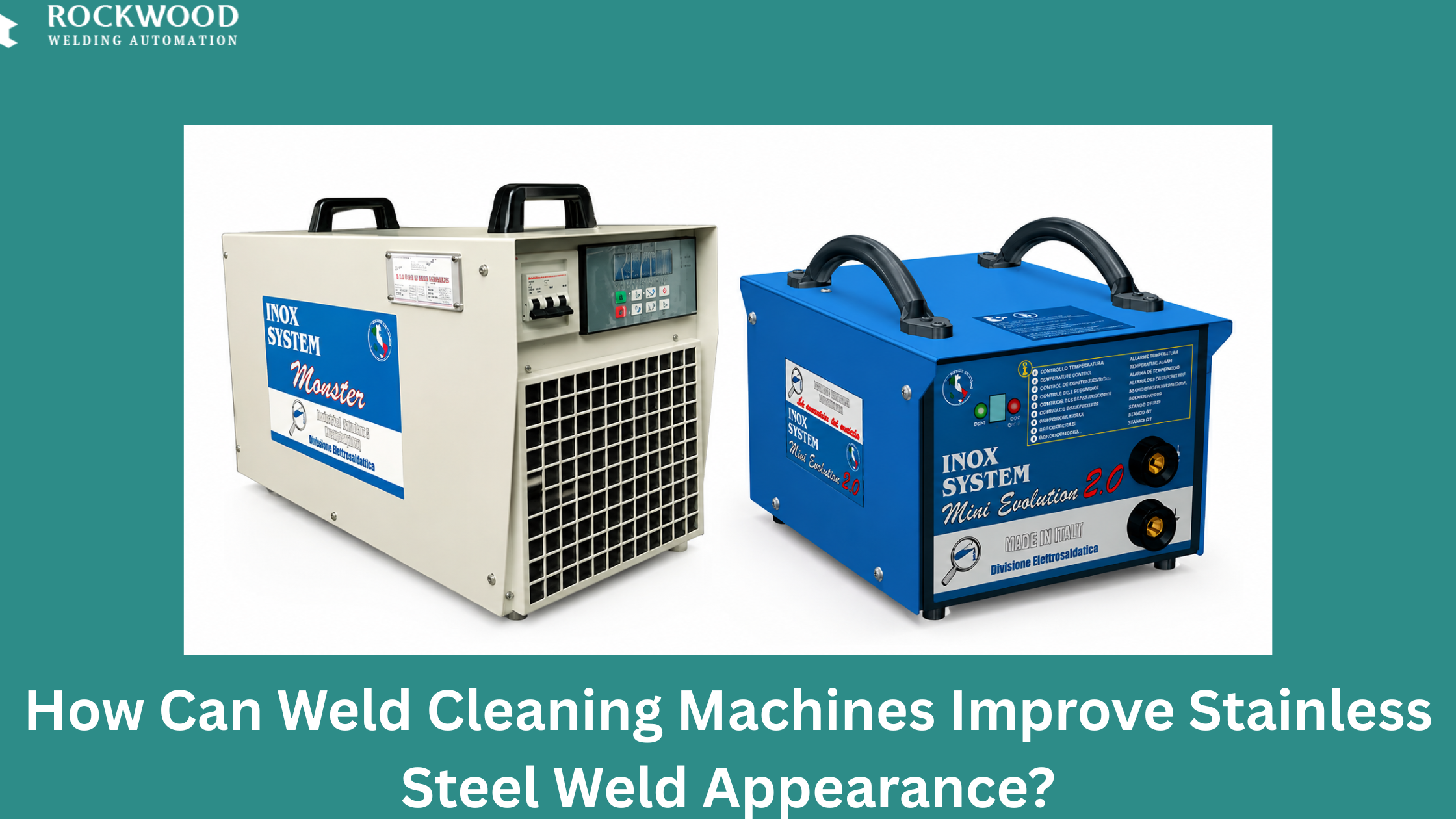
This is where weld cleaning machines can become an important part of the post-weld finishing process. By removing heat tint and surface oxidation around stainless steel welds, suitable cleaning equipment can help fabricators achieve a cleaner, more uniform appearance while supporting the intended surface condition of the material.
Why Does Stainless Steel Change Colour After Welding?
During welding, the stainless steel around the weld is exposed to elevated temperatures. When this hot surface reacts with oxygen, an oxide layer forms. This is commonly referred to as heat tint.
Depending on the temperature and welding conditions, the affected area can display straw, yellow, brown, purple or blue colours. The appearance and extent of heat tint can be influenced by factors such as welding heat input, travel speed, shielding gas coverage, material thickness and joint configuration.
For visible stainless steel components, this discolouration can make an otherwise professionally fabricated part look unfinished.
Does Heat Tint Affect More Than Appearance?
Heat tint is not simply a cosmetic issue.
Stainless steel achieves much of its corrosion resistance through a thin, protective chromium-rich passive layer on its surface. Welding and oxidation can alter the surface condition around the weld. The heat-affected region can become relatively chromium-depleted beneath the oxide layer, potentially reducing local corrosion resistance.
This is particularly relevant for components exposed to moisture, chemicals, salts or other demanding service conditions.
Consequently, post-weld cleaning can serve two purposes: improving the visual appearance of the weld and helping restore a more suitable stainless steel surface condition.
How Do Weld Cleaning Machines Improve Stainless Steel Weld Appearance?
1. Remove Visible Heat Tint
A suitable weld cleaning machines can target oxidation and heat tint around the weld without requiring the entire stainless steel component to be refinished.
Removing the discoloured layer helps produce a cleaner transition between the weld zone and surrounding stainless steel. This is especially valuable for visible architectural, decorative and equipment surfaces.
2. Create a More Consistent Finish
Stainless steel is often supplied with a defined surface finish, such as brushed, satin or polished. Aggressive or uncontrolled grinding can create scratches, uneven textures or a noticeable difference between the weld area and the parent material.
Weld cleaning equipment can provide a more controlled approach to localized post-weld treatment. However, the final appearance still depends on the original surface finish, weld condition, cleaning process and any additional finishing required.
3. Reduce Unnecessary Abrasive Work
Grinding has an important role in fabrication, particularly where weld profile correction or material removal is required. But it is not always the ideal first choice for removing surface oxidation alone.
For suitable applications, electrochemical weld cleaning can remove heat tint while limiting unnecessary alteration of the surrounding stainless steel surface.
Weld Cleaning vs Grinding: What Is the Difference?
The two processes have different purposes.
Grinding mechanically removes material and can be used to level welds, remove defects or prepare a surface for further finishing.
Weld cleaning focuses primarily on removing oxidation, heat tint and surface contamination associated with welding.
Therefore, they should not be considered direct replacements for one another. A fabricator may use grinding where material removal is necessary and weld cleaning where the main requirement is treatment of the oxidized surface.
What Is the Difference Between Weld Cleaning and Passivation?
These terms are sometimes used interchangeably, but they describe different aspects of stainless steel treatment.
Weld cleaning removes surface oxidation and contamination, including heat tint.
Pickling uses chemical treatment to remove oxide scale and a thin layer of metal.
Passivation is intended to support the formation of the protective passive layer on stainless steel after fabrication and cleaning.
The appropriate treatment depends on the stainless steel grade, fabrication process, surface condition and service environment.
Where Are Weld Cleaning Machines Useful in the UAE?
Weld cleaning machines in Dubai can be valuable across several stainless steel fabrication sectors.
Food and Beverage Equipment
Stainless steel tanks, processing equipment and pipework require clean, carefully finished surfaces. Weld treatment can help remove visible oxidation and support appropriate surface hygiene and corrosion performance.
Architectural and Decorative Fabrication
Handrails, balustrades, decorative panels, counters and other visible stainless steel components often require a consistent appearance. Heat-tinted welds can be particularly noticeable on brushed or polished surfaces.
Industrial Tanks and Process Equipment
Stainless steel vessels, fabricated pipework and process equipment may operate in environments where corrosion resistance is important. Proper post-weld treatment can therefore be part of a broader surface-finish and fabrication-quality process.
General Stainless Steel Fabrication
Fabricators working with grades such as 304 and 316 stainless steel can use suitable weld cleaning processes for different workshop and project requirements.
What Should You Consider When Choosing a Weld Cleaning Machines?
UAE fabricators should consider more than the machine’s advertised cleaning speed. Important factors include:
- Stainless steel grades being processed
- Weld size and geometry
- Material thickness
- Required surface finish
- Accessibility of the weld
- Frequency and volume of fabrication
- Cleaning method and consumables
- Portability for workshop or site applications
- Operator requirements
- Availability of technical support and consumables
The correct machine should match the actual fabrication workload rather than simply being selected based on maximum specifications.
5 Signs Your Workshop Needs Better Weld Cleaning
Your current post-weld process may need improvement if:
- Blue, purple, brown or straw-coloured heat tint remains around welds.
- Welded areas look noticeably different from the surrounding stainless steel.
- Grinding is producing inconsistent surface textures.
- Customers expect a higher-quality architectural finish.
- Stainless steel components will operate in environments where surface corrosion resistance is important.
Final Takeaway
For stainless steel fabrication, weld cleaning is about more than making a weld look attractive. Proper post-weld treatment can remove heat tint and oxidation, improve surface consistency and support the corrosion-resistant characteristics expected from stainless steel.
For UAE fabricators handling architectural, food-processing, industrial or general stainless steel projects, a suitable weld cleaning machines can make post-weld finishing more controlled and repeatable.
The right solution should be selected according to the stainless steel grade, weld condition, required finish, production volume and service environment. With the appropriate equipment and fabrication practices, cleaner welds can contribute to a more professional final product and a better overall stainless steel fabrication process.
To learn more, click: Are Difficult Threaded Welding Studs Increasing Your Fabrication Costs in UAE?

Related Posts