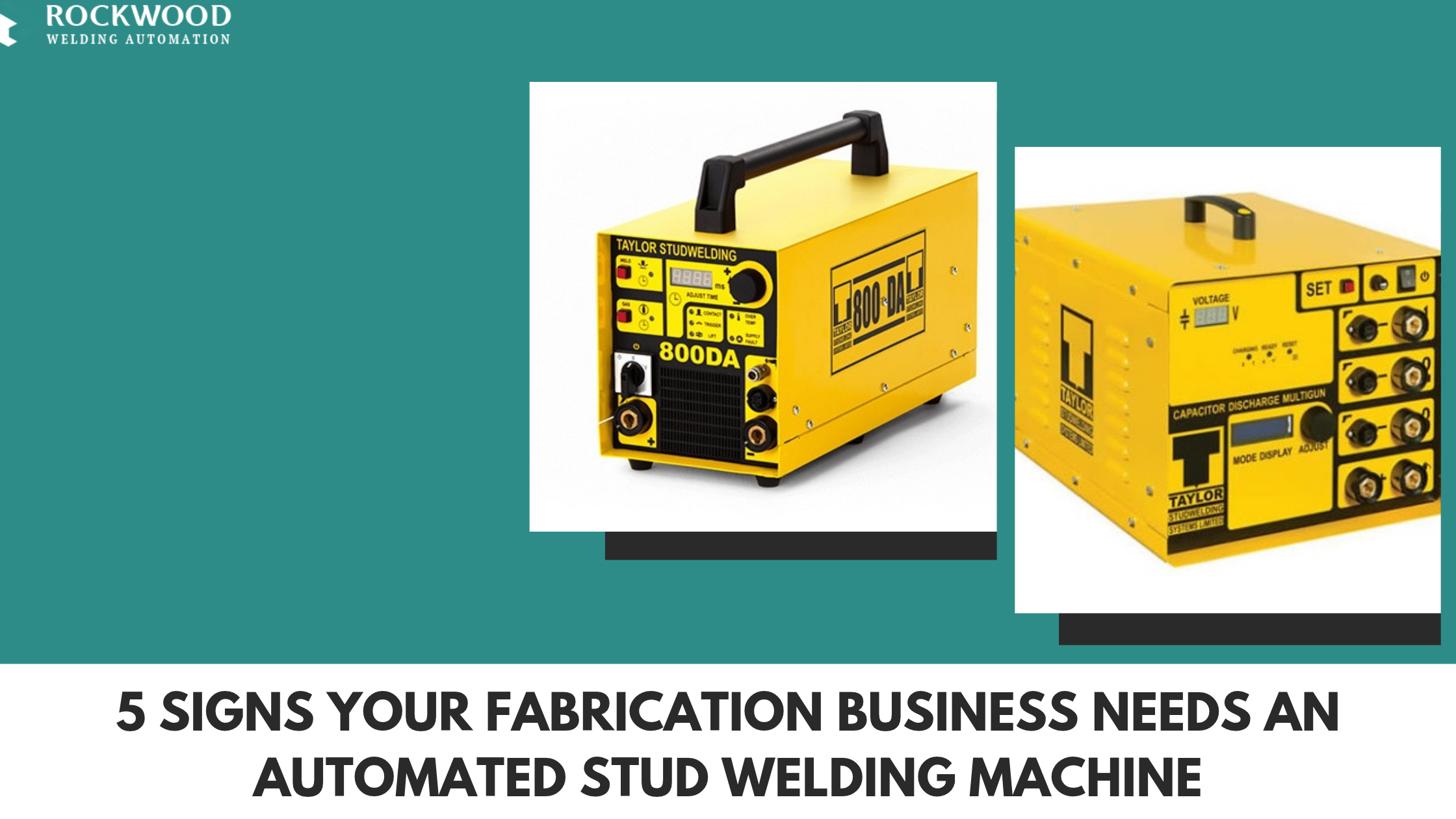
Steel fabrication businesses in the UAE face increasing pressure to maintain consistent weld quality, meet project deadlines, and manage production costs. As order volumes grow, manual stud welding can become a bottleneck, particularly when components require numerous studs in precise positions.
Automated Stud Welding Machines in Dubai can help fabrication companies improve repeatability, reduce repetitive handling, and streamline high-volume production. However, automation is not necessary for every workshop. Understanding the signs that indicate a need for investment can help businesses make informed decisions.
1. Your Production Team Struggles to Meet Growing Order Volumes
When a fabrication workshop receives more orders, manual stud welding can struggle to keep pace. Each component may require multiple studs, and operators must position the welding gun, align the stud, and complete the welding cycle repeatedly.
This becomes particularly challenging when producing structural steel components, metal panels, electrical enclosures, and other products with repetitive stud patterns.
Automated systems can combine programmable positioning, controlled welding sequences, and automated stud welding machine. CNC-controlled equipment can also reduce the time spent manually locating each stud.
What should you measure?
- Number of studs completed per shift.
- Average cycle time per component.
- Daily production against delivery targets.
- Waiting time between welding and subsequent fabrication stages.
Some automated systems advertise welding rates of up to 60 studs per minute, depending on their configuration and application. Actual output will vary with stud specifications, component handling, setup time, and inspection requirements.
If your workshop regularly misses production targets because of repetitive stud welding, automation may be worth evaluating.
2. Stud Positioning Errors and Rework Are Increasing
Accurate stud placement is essential when fabricated components must align with approved drawings or fit into larger assemblies. Incorrect spacing, misplaced studs, and inconsistent orientation can create installation difficulties and additional rework.
For example, a steel panel with incorrectly positioned studs may require corrective work before assembly. In structural applications, deviations outside the specified tolerances can also affect acceptance and installation.
Automated stud welding machines can use programmed coordinates, fixtures, and controlled positioning systems to improve repeatability across production batches.
However, the results depend on correct programming, component alignment, fixture quality, and machine calibration.
Track these indicators:
- Misplaced studs per production batch.
- Rework hours associated with stud welding.
- Positioning deviations against approved drawings.
- Cost of rejected or corrected components.
If these figures continue to increase, a CNC-controlled system may help reduce avoidable errors. The equipment should be tested using representative components before purchase.
3. Skilled Operators Spend Too Much Time on Repetitive Tasks
Experienced welders are valuable resources in a fabrication business. However, when they spend much of their working day performing repetitive stud placement and welding, other production activities may compete for their time.
Automatic stud feeding and programmable welding sequences can reduce repetitive manual handling. Depending on the machine design, operators may be able to manage production more efficiently while the equipment completes programmed tasks.
Automation still requires trained personnel for setup, monitoring, maintenance, and quality checks. It changes how labour is used rather than eliminating the need for skilled workers.
Evaluate the following:
- Labour hours required for every 1,000 studs.
- Number of operators assigned to stud welding.
- Time spent on setup, loading, and repositioning.
- Training and maintenance requirements.
Comparing these figures before and after automation can help establish whether the investment delivers meaningful operational savings.
4. Maintaining Consistent Weld Quality Is Becoming Difficult
Stud weld quality depends on several factors, including the welding process, current, weld time, stud condition, surface preparation, and base material. Variations in operator technique or incorrect settings can lead to inconsistent results.
Automated equipment can store and repeat validated welding parameters, helping maintain consistency across similar components. Nevertheless, automation does not guarantee defect-free welds. Correct procedures, material compatibility, equipment maintenance, and appropriate inspection remain essential.
The welding process must also suit the application. Capacitor discharge stud welding is commonly used for suitable smaller studs and thin-sheet applications, while drawn-arc stud welding is widely used for structural applications requiring different stud sizes and weld characteristics.
Quality indicators to monitor include:
- First-pass acceptance rate.
- Failed welds identified during inspection.
- Rework and rejection costs.
- Compliance with project specifications and applicable welding procedures.
For UAE projects, confirm the client’s inspection requirements and relevant standards before selecting equipment or defining welding procedures.
5. Your Business Needs Better Production Planning and Scalability
When a workshop handles recurring orders, multiple component designs, and demanding delivery schedules, manual processes may limit its ability to scale efficiently.
Automated stud welding systems can support repeat production by storing programs and following defined stud positions. Systems with automatic feeding or multiple welding heads may also reduce handling time for suitable applications.
The benefits depend on the component design and production volume. A workshop manufacturing hundreds of similar panels may have different requirements from one producing unique, customised steel assemblies.
A Welding positioner can also be useful when welding components that need controlled rotation or repositioning. Although a welding positioner and an automated stud welding machine serve different purposes, appropriate workpiece handling equipment can improve access and workflow in a wider welding automation setup.
Before investing, assess your production backlog, machine utilisation, changeover times, and expected order volumes.
Choosing the Right Welding Automation Solution in the UAE
Before purchasing Automated Stud Welding Machines in Dubai, consider stud diameter, material compatibility, required welding process, component dimensions, positioning accuracy, production volume, and software capabilities.
Ask the supplier to demonstrate the equipment using your actual components. Review cycle times, weld quality, maintenance requirements, operator training, and the availability of technical support.
Working with a reliable Welding Automation Equipment Supplier in UAE can help your business assess suitable equipment, plan installation, and integrate automation into existing fabrication operations.
Calculate the potential return on investment using actual labour costs, accepted production output, rework expenses, maintenance, and equipment costs rather than relying solely on advertised welding speeds.
Conclusion
Growing production volumes, recurring positioning errors, rising labour demands, inconsistent weld quality, and limited scalability are five signs that your fabrication business may benefit from stud welding automation.
The right solution should match your components, welding requirements, and production targets. If repetitive stud welding is affecting productivity or delivery schedules, exploring automated stud welding machines in Dubai can be a practical step towards more consistent and efficient fabrication.
To learn more, click: What Should You Check Before Buying Welding Automation Equipment in UAE?

Related Posts