The UAE’s manufacturing sector is moving steadily toward automation, digitalisation, and more efficient production processes. Under Operation 300bn, the UAE aims to increase the industrial sector’s contribution to GDP to AED 300 billion by 2031, while its Industry 4.0 initiatives encourage manufacturers to adopt advanced technologies that improve productivity and competitiveness.
For steel fabrication companies, this shift raises an important question: Is your welding process ready for automation? For applications involving long, repetitive welds, welding carriages UAE can provide a practical step between conventional manual welding and fully robotic welding systems.
What Are Welding Carriages?
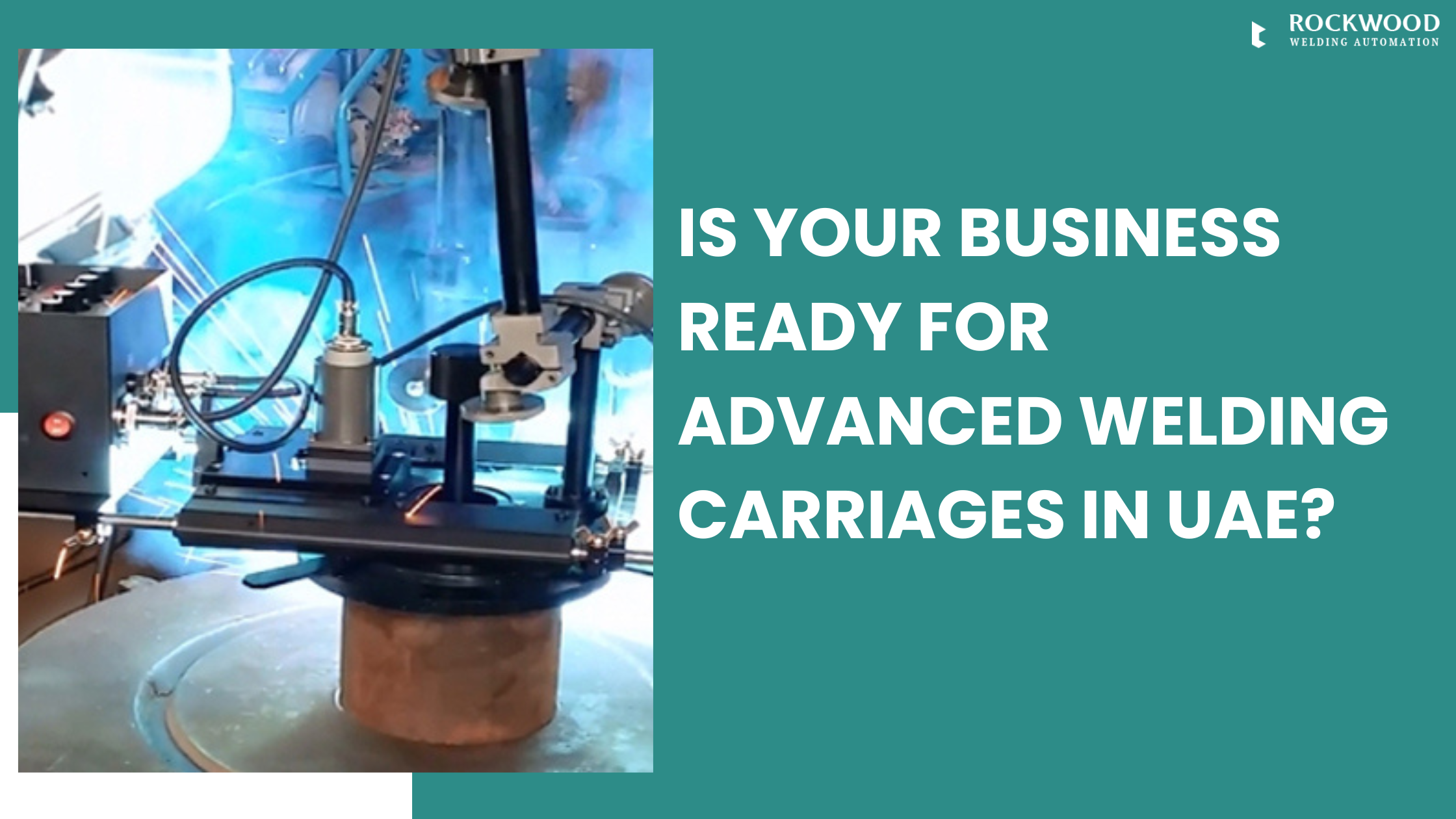
A welding carriage is a mechanized system that moves a welding torch along a defined path at a controlled speed. Depending on the model and application, carriages can support horizontal, vertical, straight, curved, fillet, butt, stitch, or continuous welding.
Unlike manual welding, where maintaining a consistent travel speed throughout a long weld can be physically demanding, a carriage provides controlled torch movement. This can help improve weld repeatability while allowing the operator to concentrate on welding parameters, joint conditions, and process monitoring.
Modern welding carriage systems may also incorporate oscillation functions for applications requiring controlled side-to-side torch movement.
Why Are Welding Carriages UAE Becoming More Important?
UAE manufacturers are increasingly looking at automation as a way to improve production efficiency and manufacturing consistency. The Ministry of Industry and Advanced Technology’s Transform 4.0 initiative, for example, aims to accelerate technology transformation among UAE manufacturers and develop Industry 4.0 “lighthouse” facilities.
For steel fabricators, welding automation does not always require a complete robotic cell. A welding carriage can automate one of the most repetitive parts of the process: controlled torch travel.
This makes the technology particularly relevant for fabricators working with long weld seams, structural assemblies, tanks, frames, and other repetitive steel components.
5 Signs Your Fabrication Business Is Ready for Welding Carriages
1. You Regularly Produce Long Weld Seams
Long fillet or butt welds are among the most practical applications for mechanized welding. If operators repeatedly weld similar joints across large steel assemblies, controlled travel can help create a more consistent process.
2. Manual Welding Is Creating Productivity Bottlenecks
Track the number of metres welded per shift rather than relying only on theoretical machine speeds. Also measure setup time, repositioning time, arc-on time, and time spent correcting weld defects.
These measurements provide a much more realistic picture of where automation could improve throughput.
3. Weld Quality Varies Between Operators
Manual welding requires operators to continuously control travel speed, torch position, angle, and distance from the workpiece. A carriage can provide more consistent mechanical travel, helping reduce variation in repetitive welding applications.
However, automation cannot correct poor joint preparation, incorrect welding parameters, contamination, or inadequate fit-up.
4. Your Components Have Repeatable Designs
Automation delivers the greatest practical value when the same welding procedure can be repeated across multiple components.
If your fabrication operation frequently produces standardized frames, structural assemblies, tanks, or similar steel components, a carriage may be a suitable automation solution.
5. You Want Automation Without a Complex Robotic Cell
Not every fabrication application requires a multi-axis robotic system. Welding carriages UAE can provide a relatively focused form of mechanization by automating torch travel while retaining operator control over setup and welding parameters.
How Welding Automation Tools in UAE Fit Into Modern Fabrication
Welding carriages are only one part of a broader automation strategy. Depending on the application, manufacturers can combine Welding automation tools in UAE such as welding positioners, rotators, column-and-boom systems, oscillators, and other mechanized equipment.
For example, a positioner can rotate a workpiece into a more suitable welding position while a carriage controls torch movement. This combination can improve accessibility and process consistency without requiring a fully robotic production cell.
What About Stud and Insulation Applications?
Steel fabrication projects often involve more than conventional structural welding. Automated Stud Welding Machines in Dubai can be considered for repetitive stud-welding applications where consistent positioning and production speed are important.
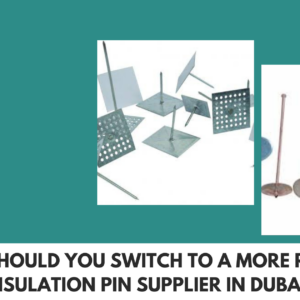
Similarly, projects involving thermal insulation may require insulation pins and related fastening solutions. Working with an experienced Insulation pin supplier in Dubai can help fabricators select suitable products according to the insulation system, substrate, and installation requirements.
The important point is to select equipment according to the actual application rather than choosing automation simply because it is available.
How to Calculate the Potential ROI
Before investing in welding carriages UAE, establish a baseline for your existing operation.
Record:
- Welding hours per shift
- Metres of weld completed
- Labour hours per component
- Welding wire consumption
- Shielding-gas consumption
- Rework and repair hours
- Production volume
- Machine downtime
- Number of shifts
You can then compare the current cost per metre of weld with the projected cost after mechanization.
This approach provides a more meaningful ROI calculation than relying on generic claims about percentage productivity improvements.
Are Welding Carriages Right for Your UAE Fabrication Business?
Welding carriages can be a strong option when your operation involves repetitive welding, long seams, standardized components, and consistent production volumes.
They may be less suitable for highly customized fabrication where weld locations, component dimensions, and production requirements change constantly.
Ultimately, the right automation strategy depends on your material, joint configuration, weld length, production volume, welding process, and required quality level.
Build a More Consistent Welding Process
For UAE steel fabricators, automation is not simply about replacing manual work. It is about making production more repeatable, measurable, and efficient. Welding carriages UAE can serve as a practical entry point into mechanized welding, while other automation tools can be added as production requirements grow.
A detailed assessment of your current welding process, component designs, production volume, and quality requirements can help determine whether a welding carriage—or another welding automation solution—is the right investment for your facility.
To learn more, click: When Should You Switch to a More Reliable Insulation Pin Supplier in Dubai?

Related Posts