As manufacturing in the UAE continues to grow, businesses are under increasing pressure to deliver higher-quality products in less time while keeping costs under control. Whether you manufacture steel structures, automotive parts, industrial equipment, or metal components, maintaining consistent weld quality and meeting production deadlines can be challenging with manual welding alone.
Robotic welding machines are no longer reserved for large factories. Modern systems are designed for businesses of all sizes, offering easier setup, improved accuracy, and reliable day-to-day performance. If you’ve been wondering whether it’s the right time to automate, here are 10 clear signs your factory is ready for a robotic welding machine.
1. Your Production Orders Keep Increasing
A growing order book is great for business—but it can quickly expose the limits of manual welding. If your team is regularly working overtime or struggling to meet delivery schedules, automation can help maintain production without sacrificing quality.
Real-world example: A steel fabrication company in Dubai secured several large commercial projects. Instead of hiring additional welders, they introduced a robotic welding system to increase output while keeping delivery timelines on track.
2. Weld Quality Varies Between Operators
Even experienced welders can produce different results depending on skill level, fatigue, or working conditions. Inconsistent welds often lead to rework, customer complaints, and unnecessary material waste.
A robotic welding machine in UAE follows the same programmed path every cycle, producing uniform welds with consistent penetration and appearance.
Real-world example: A manufacturer producing metal frames noticed varying weld quality across different shifts. After automating repetitive welding tasks, the rejection rate dropped significantly because every part met the same quality standard.
3. Skilled Welders Are Difficult to Find
Many manufacturers across the UAE face challenges in recruiting and retaining experienced welders. Labor shortages can slow production and increase operating costs.
Robotic welding helps reduce dependency on manual labor by handling repetitive welding operations while skilled workers focus on programming, inspection, and complex fabrication tasks.
Real-world example: An Abu Dhabi fabrication workshop struggled to fill welding vacancies. By adding robotic welding cells, existing employees were reassigned to higher-value work instead of repetitive production welding.
4. Rework Is Affecting Your Profits
Every defective weld costs money through additional labor, wasted materials, delayed deliveries, and customer dissatisfaction.
If rework has become a regular part of production, it’s a strong indication that your welding process needs better consistency.
Real-world example: A manufacturer producing industrial equipment found that repeated welding defects were delaying shipments. After introducing robotic welding, consistent weld quality reduced repair work and improved overall productivity.
5. Workplace Safety Is Becoming a Concern
Manual welding exposes operators to heat, sparks, fumes, and repetitive physical movements. While proper safety procedures help, repetitive welding still carries workplace risks.
Robotic welding automates hazardous welding tasks, allowing operators to supervise the process from a safer distance.
Real-world example: A heavy equipment manufacturer automated long welding cycles that previously required operators to remain near high-temperature workpieces, creating a safer production environment.
6. Your Factory Produces Similar Parts Every Day
Robotic welding performs best when the same components are welded repeatedly. If your production involves similar frames, pipes, brackets, tanks, or structural parts, automation can dramatically improve efficiency.
Once a welding program is created, the robot can repeat the same operation with precision throughout every production run.
Real-world example: A company manufacturing steel brackets for construction projects programmed a robotic welding machine once and used it for thousands of identical parts with minimal adjustments.
7. You Want to Stay Competitive in the UAE Manufacturing Market
Customers increasingly expect faster delivery, consistent quality, and competitive pricing. Manufacturers that invest in automation often gain an advantage by reducing production time while maintaining high standards.
Robotic welding allows businesses to improve productivity without significantly increasing labor costs, making it easier to compete in today’s industrial market.
Real-world example: A medium-sized fabrication company introduced robotic welding to improve production efficiency. Faster turnaround times helped them secure larger contracts that previously would have exceeded their manufacturing capacity.
8. Production Bottlenecks Are Slowing Other Processes
If welding consistently becomes the slowest stage of production, every department downstream is affected. Delays in welding can create inventory backlogs and missed delivery deadlines.
Robotic welding machines operate continuously with predictable cycle times, helping maintain a smoother production flow.
Real-world example: A manufacturer producing storage tanks found assembly waiting for welded components every week. After automating welding, production became more balanced across all departments.
9. You’re Looking to Reduce Long-Term Operating Costs
Although robotic welding requires an initial investment, many manufacturers recover costs through higher productivity, lower scrap rates, reduced rework, and improved equipment utilization.
Automation also helps stabilize production costs despite labor market fluctuations.
Real-world example: A fabrication business compared its annual welding expenses with projected robotic welding performance and found the automation investment offered significant long-term savings through increased throughput.
10. You’re Planning for Future Growth
Factories planning expansion need production systems that can scale with increasing demand. Investing in robotic welding today creates a foundation for future manufacturing growth.
Modern robotic welding systems are designed to integrate with expanding production lines, making it easier to increase capacity without rebuilding your entire workflow.
Real-world example: A growing industrial manufacturer installed robotic welding during a facility upgrade, allowing future production increases without major operational changes.
Conclusion
If several of these signs sound familiar, your factory may be ready to take the next step toward welding automation. Robotic welding machines are no longer limited to large manufacturers—they have become practical, reliable solutions for businesses of all sizes across the UAE.
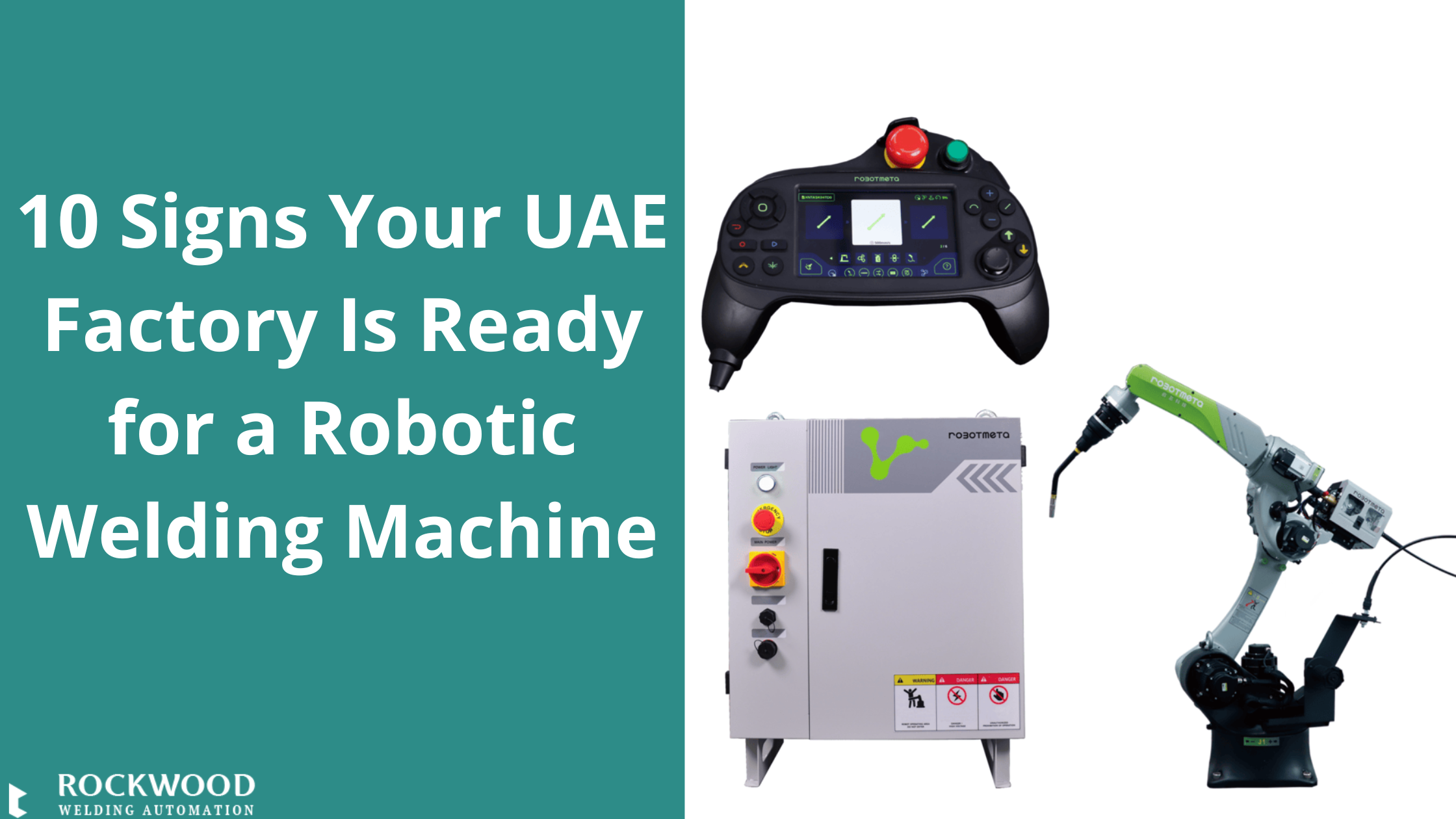
From improving weld consistency and reducing rework to addressing skilled labor shortages and increasing production capacity, robotic welding helps manufacturers build more efficient and competitive operations. Brands like Robometa simplify the transition by offering integrated controllers, robot arms, and welding systems designed to work together seamlessly. By investing in automation today, UAE manufacturers can improve productivity, enhance workplace safety, and position themselves for sustainable long-term growth.
To learn more, click: What Is the Purpose of Shear Studs in Steel Construction?

Related Posts