The Gulf Cooperation Council (GCC) region is witnessing rapid industrial growth driven by ambitious infrastructure projects, expanding manufacturing sectors, and increasing investments in oil and gas, construction, shipbuilding, and renewable energy. As industries strive to improve productivity, maintain quality standards, and remain competitive in global markets, modern welding automation equipment has emerged as a game-changing solution.
From welding positioners and rotators to advanced column and boom manipulators, welding automation products are helping GCC businesses streamline operations, reduce costs, and achieve superior welding results. Let’s explore how industries across the GCC are benefiting from modern welding automation equipment.
What Is Welding Automation Equipment?
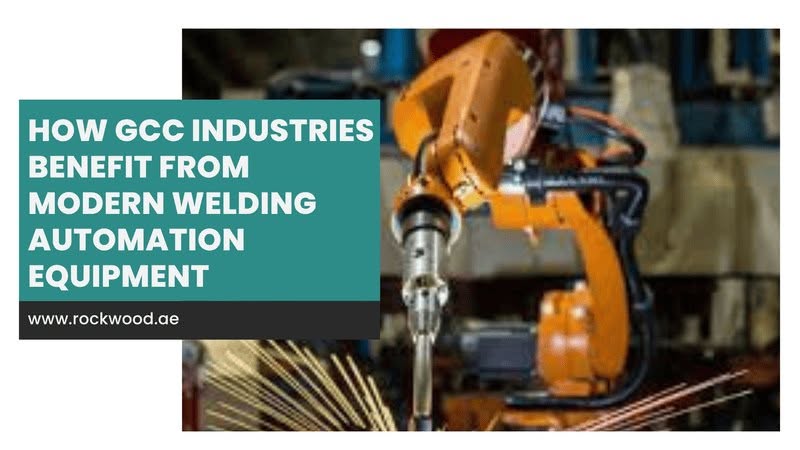
Welding automation equipment refers to systems and machinery designed to automate or assist welding processes. These solutions minimize manual intervention while ensuring consistent and precise welds. Common welding automation products include:
- Welding Positioners
- Welding Rotators
- Column and Boom Manipulators
- Automated Welding Systems
- Robotic Welding Solutions
- Welding Turntables and Fixtures
These technologies are widely used in industries where accuracy, efficiency, and repeatability are critical.
Increased Productivity and Faster Project Completion
One of the most significant benefits of welding automation equipment is increased productivity. Manual welding can be time-consuming, particularly for large-scale fabrication projects involving repetitive welds.
Modern welding automation systems enable continuous operation with minimal downtime, allowing manufacturers to complete projects faster. Industries such as oil and gas, pressure vessel manufacturing, and structural steel fabrication in the GCC can significantly improve production output while meeting strict project deadlines.
Automated welding equipment also helps businesses handle larger workloads without proportionally increasing labor costs, making operations more scalable and profitable.
Consistent Weld Quality and Precision
Maintaining consistent weld quality is a major challenge in manual welding operations. Human factors such as fatigue, skill variations, and environmental conditions can affect welding accuracy.
Welding automation equipment ensures precise control over welding parameters, including travel speed, arc length, and torch positioning. This results in:
- Uniform weld quality
- Reduced defects and rework
- Improved structural integrity
- Better compliance with industry standards
For GCC industries working on critical infrastructure, pipelines, offshore structures, and industrial equipment, consistency is essential for safety and long-term performance.
Enhanced Workplace Safety
Industrial welding environments often expose workers to hazards such as heat, sparks, fumes, and repetitive physical strain. Welding automation significantly reduces direct operator exposure to these risks.
Equipment such as welding manipulators and rotators allows operators to control processes from safer positions while minimizing manual handling of heavy components. This creates a safer working environment and helps organizations meet occupational health and safety requirements.
As workplace safety regulations continue to evolve across GCC countries, automation is becoming an important investment for responsible industrial operations.
Reduced Labor Dependency
Many industries in the GCC face challenges related to skilled labor availability and workforce management. Welding automation helps address these challenges by reducing dependence on highly skilled manual welders for repetitive tasks.
Rather than replacing workers, automation enables skilled professionals to focus on supervision, quality control, programming, and advanced fabrication processes. This improves workforce efficiency while helping companies overcome labor shortages and rising operational costs.
Cost Savings and Better Return on Investment
Although welding automation equipment requires an initial investment, it often delivers substantial long-term cost savings.
Businesses benefit from:
- Reduced material wastage
- Lower rework costs
- Increased production efficiency
- Less downtime
- Improved resource utilization
The combination of higher productivity and lower operating expenses results in a strong return on investment. Many GCC manufacturers find that automation quickly pays for itself through improved operational performance.
Supporting Large-Scale GCC Infrastructure Projects
The GCC region is home to numerous mega-projects, including industrial plants, transportation networks, energy facilities, and smart city developments. These projects require high-volume fabrication and welding operations performed to strict quality standards.
Modern welding automation equipment enables fabricators to meet demanding project requirements while maintaining consistency and efficiency. Automated welding solutions are particularly valuable for:
- Oil and gas facilities
- Petrochemical plants
- Pressure vessel manufacturing
- Shipbuilding and marine industries
- Structural steel fabrication
- Renewable energy projects
By improving precision and productivity, welding automation supports the successful execution of complex industrial projects across the region.
Future-Proofing GCC Manufacturing Industries
Welding automation is becoming an essential component of modern production facilities. Advanced systems can integrate with digital monitoring tools, quality control software, and smart manufacturing platforms.
Companies that invest in welding automation today position themselves for future growth, improved competitiveness, and greater operational flexibility. Automation helps businesses adapt to changing market demands while maintaining high standards of quality and efficiency.
Conclusion
Modern welding automation equipment is transforming industrial operations across the GCC. By improving productivity, ensuring consistent weld quality, enhancing workplace safety, reducing labor dependency, and supporting large-scale projects, automated welding solutions deliver measurable benefits for manufacturers and fabricators.
As industrial sectors continue to expand throughout the region, partnering with a trusted Welding Automation Equipment Supplier in UAE can help businesses access advanced technologies that drive efficiency and long-term success. Investing in welding automation products is no longer just an option—it’s a strategic step toward sustainable growth in today’s competitive industrial landscape.
To learn more, click: Advanced Welding Automation Solutions for Oil and Gas Industries in UAE

Related Posts