The UAE’s manufacturing and fabrication sector is evolving at an unprecedented pace. Driven by large-scale infrastructure projects, oil & gas expansion, shipbuilding, and industrial diversification initiatives, manufacturers are under increasing pressure to deliver high-quality welds, faster turnaround times, and consistent production outcomes.
In this environment, welding manipulators have emerged as a cornerstone of welding automation, enabling fabricators to meet stringent quality standards while improving productivity and workplace safety. This article explores the techniques behind welding manipulators and explains why they have become essential across UAE fabrication facilities.
Understanding Welding Manipulators in Modern Fabrication
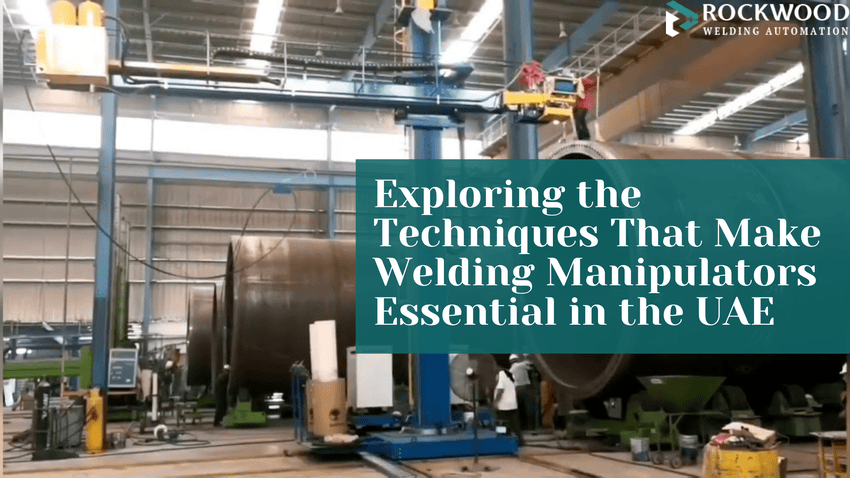
A welding manipulator is a mechanized system designed to position and move workpieces or welding torches with precision during welding operations. Unlike manual setups, manipulators allow controlled movement across multiple axes, ensuring repeatability and accuracy.
In UAE workshops handling heavy steel components—such as pressure vessels, large pipes, and offshore structures—manual welding alone often struggles to maintain consistency. Welding manipulators bridge this gap by integrating mechanical precision with automated control systems, making them indispensable for modern fabrication.
Core Techniques That Power Welding Manipulators
1. Precision-Controlled Linear and Rotational Motion
One of the most critical techniques behind the welding manipulator in UAE is precision-controlled movement. Manipulators ensure uniform travel speed and consistent torch positioning throughout the weld seam.
Why it matters in the UAE:
- Reduce Many Of The Common Welding Defects Including Undercutting And Lack Of Fusion
- Ensures compliance with international welding codes (ASME, AWS, ISO)
- Particularly valuable for long circumferential and longitudinal welds in pressure vessels and pipelines
Studies across automated welding environments show defect reduction rates of up to 40% compared to manual welding.
2. Multi-Axis Manipulation for Complex Weld Geometry
Modern welding manipulators offer 2-axis, 3-axis, and even 6-axis configurations, enabling smooth positioning of complex workpieces.
Key applications in the UAE:
- Cylindrical tanks and large-diameter pipes
- Offshore modules and structural frames
- Heavy-duty fabrication requiring consistent weld orientation
By keeping the weld joint in the optimal position, manipulators enhance penetration quality and reduce operator fatigue.
3. Automated Torch Positioning and Angle Control
Maintaining the correct torch angle, arc length, and standoff distance is essential for weld quality. Welding manipulators automate these parameters, ensuring consistent bead appearance and metallurgical integrity.
Technical advantages:
- Improved weld penetration and bead uniformity
- Reduced spatter and post-weld cleaning time
- Enhanced performance in TIG, MIG/MAG, FCAW, and SAW processes
This level of control is especially beneficial for thick materials commonly used in UAE industrial projects.
4. CNC and PLC-Based Control Integration
Advanced welding manipulators integrate seamlessly with PLC and CNC systems, enabling the execution of programmable weld sequences and repeatable operations.
Automation capabilities include:
- Pre-set weld paths and speeds
- Synchronization with column & boom systems and rotators
- Real-time monitoring and fault detection
Such integration aligns with the UAE’s push toward Industry and smart manufacturing, allowing workshops to scale operations without compromising quality.
Why Welding Manipulators Are Essential in the UAE Market
Supporting High-Growth Industrial Sectors
The UAE’s industrial ecosystem relies heavily on fabrication-intensive sectors such as:
- Oil & gas processing and pipeline fabrication
- Shipbuilding and marine repair
- Heavy machinery and steel structure manufacturing
Welding manipulators enable these industries to handle large volumes, heavy components, and tight project timelines efficiently.
Meeting International Quality and Safety Standards
Projects across the UAE often serve global clients and must comply with strict international standards. Welding manipulators help ensure:
- Uniform weld quality across batches
- Decreases Human Error
- Increase Traceability And Process Control
This consistency strengthens a fabricator’s competitiveness in international markets.
Real-World Applications of Welding Manipulators in the UAE
Oil & Gas Fabrication
- Longitudinal and circumferential welding of pressure vessels
- Automated SAW welding for thick-walled pipes
- Productivity gains of 30–50% compared to manual welding
Shipbuilding and Offshore Structures
- Multi-position welding of large steel plates
- Improved operator safety in confined or elevated environments
Heavy Equipment Manufacturing
- Repetitive weld joints with consistent quality
- Significant reduction in rework and inspection failures
Key Technical Advantages of Welding Manipulators
Consistent Weld Quality
- Stable welding parameters
- Reduced porosity, distortion, and weld defects
Higher Productivity and Throughput
- Faster welding cycles
- Continuous operation with minimal downtime
Increase Operator Safety
- Decreases Physical Strains
- Reduces The Risks From Exposure To Fumes, Heat And Arc Radiation
Versatility Across Welding Processes
- Compatible with MIG, TIG, FCAW, and SAW systems
- Easily adaptable to various fabrication needs
ROI and Cost Efficiency for UAE Fabricators
While there is an upfront cost associated with welding manipulators, the ongoing financial benefits make them worth the investment.
- Lower rework and scrap rates
- Reduced dependency on highly skilled manual welders
- Faster project completion and improved delivery timelines
Many UAE fabrication facilities report ROI within 12 to 24 months, driven by productivity gains and quality improvements.
Choosing the Right Welding Manipulator for Your Operation
UAE manufacturers should consider these items when installing a welding manipulator:
Load Capacity and Reach
- Maximum workpiece weight
- Vertical lift and horizontal reach requirements
Integrating into their overall weld system
- Compatibility with existing welding power supplies
- Integration with column & boom systems or rotators
Local Support and Service
- Availability of installation, training, and maintenance services in the UAE
- Reliable after-sales support for long-term performance
Future Trends in Welding Automation
The next generation of welding manipulators will feature:
- Sensor-based adaptive welding
- AI-driven weld path correction
- IoT-enabled performance monitoring and predictive maintenance
As UAE manufacturers continue to adopt smart factories, welding manipulators will play an increasingly critical role in their automation strategies.
Welding manipulators are no longer optional equipment—they are strategic assets for fabrication companies in the UAE. By combining precision, productivity, and safety, they enable manufacturers to meet international standards while remaining competitive in a demanding industrial landscape.
For companies seeking to upgrade their welding operations, investing in advanced welding manipulators and automation solutions is a decisive step toward long-term growth and operational excellence.
To continue reading, click: A Technical Guide to Shear Stud Welding Machines in the UAE

Related Posts