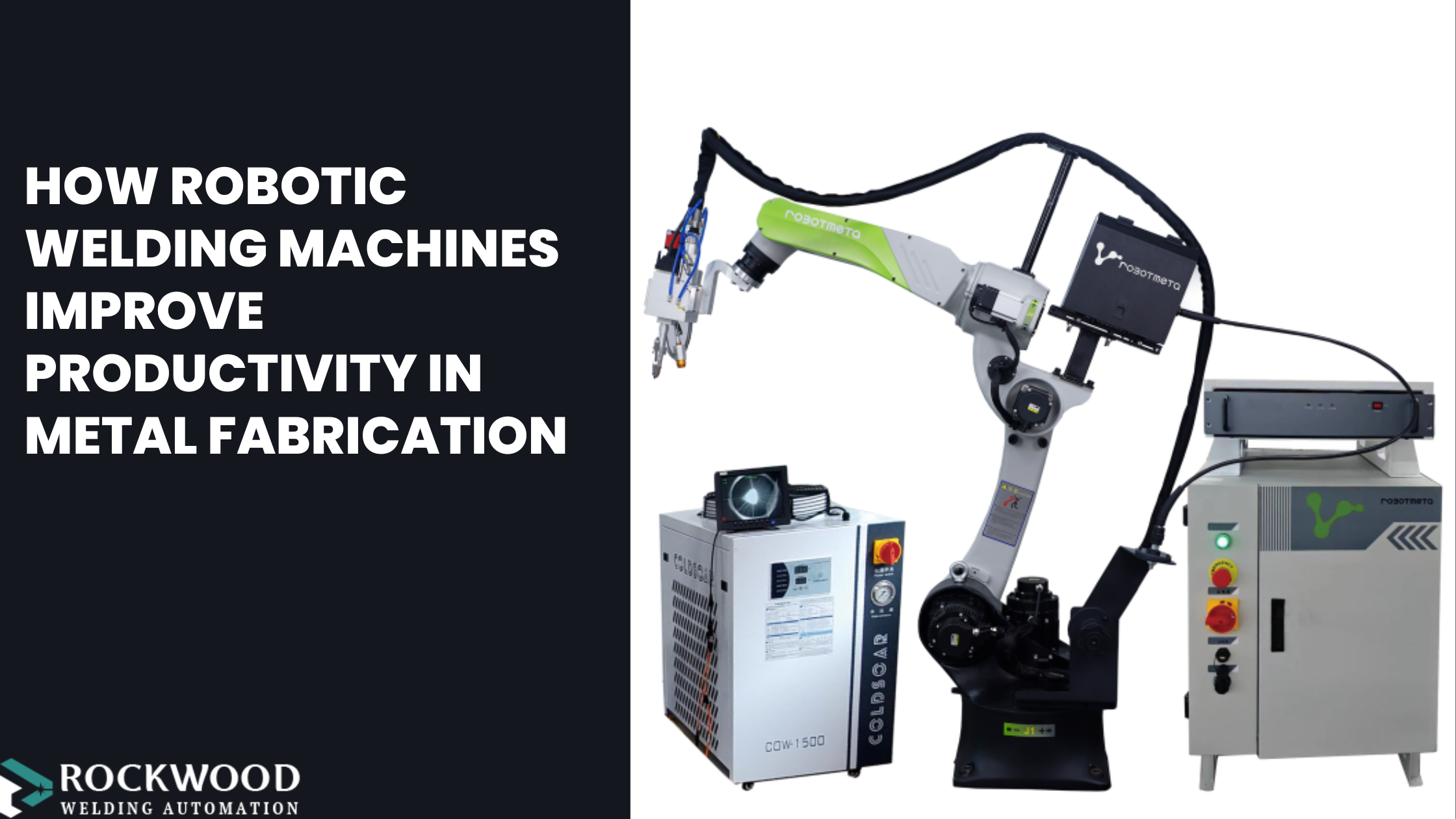
The fast-paced industrial environment has put increasing pressure on metal fabrication companies to improve productivity and provide high-quality results while maintaining a competitive edge. One of the most impactful advancements reshaping fabrication workshops is the adoption of robotic welding machines. These intelligent, automated systems offer unmatched precision, repeatability, and efficiency—transforming operations for manufacturers across the UAE and beyond.
Whether you’re running a small workshop or a large-scale fabrication facility, robotic welding has become more than an option—it’s a strategic investment. Here’s how robotic welding machines significantly improve productivity in metal fabrication.
1. Consistent and High-Quality Welds Every Time
Manual welders have varying skill levels, and even the best professionals may produce inconsistent results over long shifts. Robotic welding machines eliminate this challenge by delivering precise and uniform welds throughout the production cycle.
Why it boosts productivity:
- Reduced rework and welding errors
- Reduced Scrap Material
- Improved Quality Control (and fewer product recalls)
- Strong and uniform weld joints that enhance product durability
By being able to produce large quantities of parts with higher consistency than human welders, Workshops have an advantage over many competitors and developing countries.
2. Increased Welding Speed and Faster Production Cycles
Robotic welding systems are capable of working at very high speeds, typically over 50 percent faster than human welders, and they do not require rest breaks, pauses, or downtime. They also provide the ability to significantly increase Production Capacity.
Speed advantages include:
- Higher deposition rates
- Faster torch movement and arc stability
- Reduced idle time between welds
- Ability to operate 24/7 for mass production
By accelerating welding cycles, businesses can take on more projects, reduce lead times, and improve delivery commitments.
3. Enhanced Safety for Workers
Metal fabrication environments involve high temperatures, fumes, sparks, and hazardous materials. Robotic welding machines in UAE help minimize these risks by taking over tasks that expose workers to danger.
Safety benefits that increase productivity:
- Fewer workplace injuries
- Reduced downtime caused by accidents
- Lower medical and insurance costs
- Workers can focus on safer, high-value tasks
A safer workplace also improves employee morale and retention, contributing indirectly to better productivity.
4. Lower Operational Costs and Improved Efficiency
Robotic welding systems require a substantial initial investment, but the subsequent savings will more than offset that initial cost over time. The use of automation enables greater efficiency of material usage, lower labour costs, and greater efficiency in the control of energy consumption.
Cost and efficiency advantages:
- Less material scrap due to precise welding paths
- Reduced labor expenses for repetitive tasks
- Minimal errors leading to fewer repairs
- Higher return on investment through increased output
Production Costs can be dramatically reduced by increasing efficiency, in most instances, through Automating Operations.
5. Ability to Handle Complex and Repetitive Welding Tasks
Some welding tasks require difficult angles, complex paths, or high repeatability—areas where robots excel. Robotic welding systems can provide extremely precise welds on complex components.
This boosts productivity by:
- Reducing reliance on rare skilled welders
- Performing high-precision welds even in challenging positions
- Maintaining exact torch movement across thousands of cycles
- Handling repetitive jobs without quality degradation
Freed from many routine welding tasks, human welders can devote their skills and expertise to higher level, more creative and specialized responsibilities.
6. Improved Workflow and Production Planning
Robotic welding systems integrate seamlessly with modern production setups, allowing workshops to plan and forecast work more efficiently.
Workflow advantages:
- Predictable cycle times
- Better scheduling of materials and manpower
- Smooth integration with CNC machines, conveyors, and automation lines
- Easy monitoring through digital interfaces and welding software
This reliability can help fabrication companies deliver projects on time, improving client satisfaction and repeat business.
7. Scalability for Growing Fabrication Businesses
As metal fabrication businesses expand, the demand for consistency, speed, and quality also increases. Robotic welding machines offer scalable solutions that grow with your business.
Scalable benefits include:
- Easy programming for new welding tasks
- Ability to add more robots as demand grows
- Compatibility with future automation upgrades
- Reduced dependency on manual labor shortages
This adaptability makes robotic welding a long-term asset for metal fabrication workshops aiming for growth.
Robotic welding machines are revolutionizing the metal fabrication industry by enhancing productivity, improving weld quality, reducing costs, and creating safer workplaces. As manufacturing standards evolve and competition increases, adopting welding automation products in UAE is no longer a luxury—it’s a necessity.
For companies in the UAE and globally, investing in robotic welding is a strategic move that ensures consistent performance, faster operations, and long-term operational success. By leveraging robotic technology, fabrication businesses can stay ahead of market demands while increasing efficiency and profitability.
If you’re looking to upgrade your workshop with advanced welding automation, robotic welding machines offer a future-ready solution that guarantees superior productivity and reliability.
To continue reading, click: Reducing Manual Strain: Achieving Perfect Alignment with Welding Positioners

Related Posts