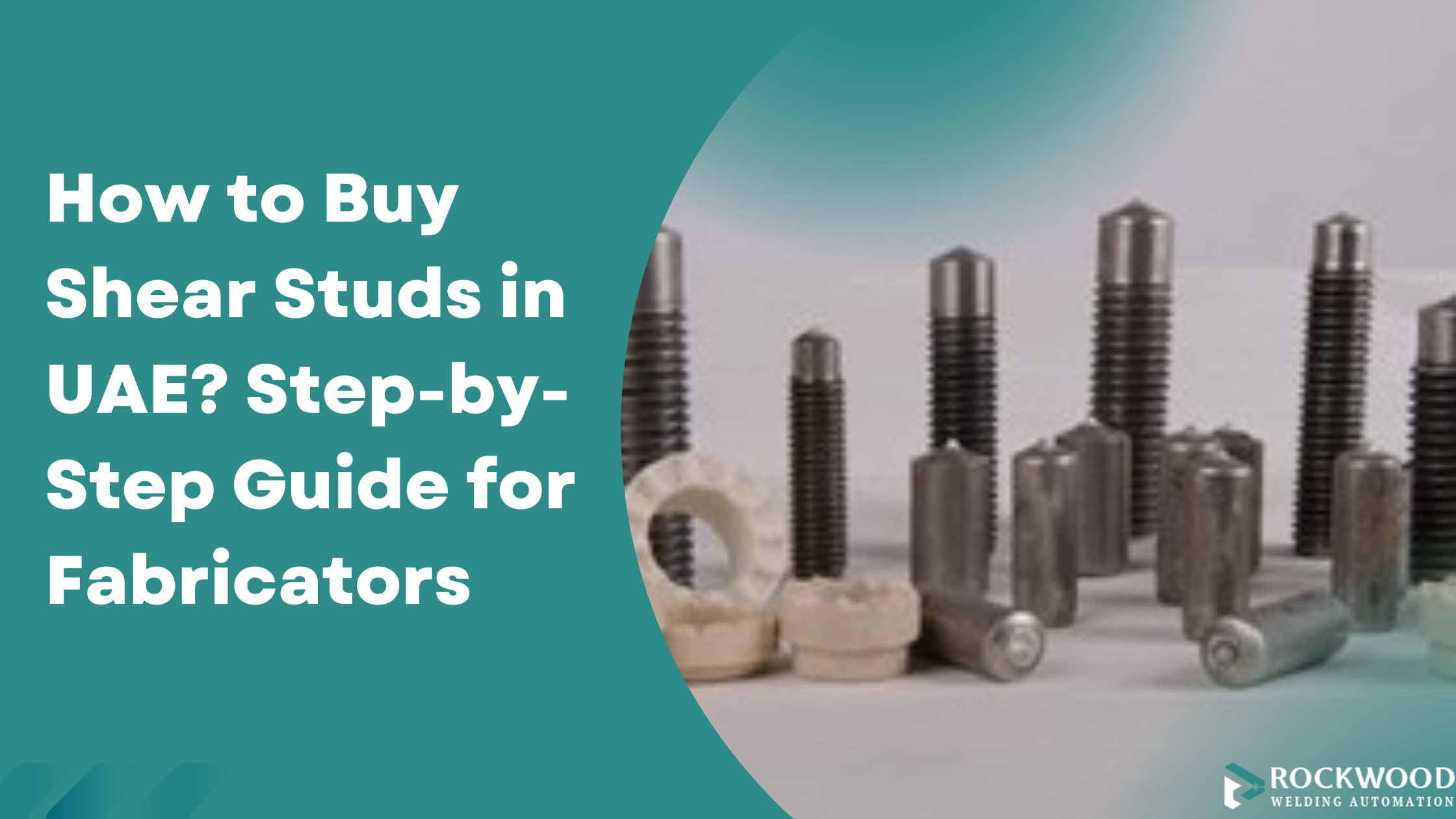
Shear studs play a critical role in modern steel construction by ensuring strong composite action between steel beams and concrete slabs. For fabricators and EPC contractors, buying the right shear studs in UAE is not just about cost—it is about structural performance, compliance, and seamless integration with welding automation systems.
In a market like the United Arab Emirates, where large-scale infrastructure, high-rise towers, and industrial projects dominate, selecting the correct shear studs and welding solutions is essential for project success.
Understanding Shear Studs and Their Role in Composite Construction
Shear studs are mechanical connectors that are welded to steel beams; their purpose is to provide an interface for the transfer of shear forces between the steel and its attached concrete. They prevent relative movement and allow both materials to work as a single structural unit. Headed shear studs are the most commonly used type in UAE construction due to their high load-bearing capacity and proven reliability.
In composite slabs, the performance of shear studs directly impacts structural strength, vibration control, and long-term durability—making quality and proper installation non-negotiable.
Typical Uses for Shear Studs
The use of shear studs has become quite common in several construction areas within the UAE:
- High-rise residential and commercial buildings for composite floors
- Bridges, flyovers, and metro projects requiring heavy load transfer
- Oil & gas facilities, power plants, and industrial structures
- Warehouses, factories, and steel platforms
Due to tight timelines and large volumes, most UAE projects rely on automated stud welding rather than manual methods.
Step-by-Step Guide to Buying Shear Studs in UAE
Step 1: Define Project and Design Requirements
Start by reviewing structural drawings to determine stud diameter, length, spacing, and load requirements. Incorrect selection can lead to consultant rejection or structural inefficiencies.
Step 2: Select the Right Shear Stud Specifications
The most frequently used shear stud diameter sizes, throughout the UAE, are 13 mm, 16 mm, 19 mm, and 22 mm. The choice depends on beam size, slab thickness, and design loads. Material strength, yield values, and corrosion resistance are especially important for coastal and industrial environments.
Step 3: Verify Standards and Certifications
Shear studs supplied in the UAE must comply with internationally accepted standards such as AWS, ISO, BS, or EN. Mill test certificates (MTCs) and traceability documents are essential for approvals from consultants and authorities.
Step 4: Ensure Compatibility with Welding Automation
Shear studs in UAE must be compatible with arc stud welding machines. Parameters such as welding current, ferrule type, and stud diameter must align with the welding automation system to achieve full weld penetration and consistent results.
Step 5: Invest in Welding Automation Solutions
Automated stud welding machines significantly improve productivity and weld quality. Compared to manual methods, welding automation delivers:
- Faster installation rates
- Uniform weld quality
- Lower rejection and rework rates
- Improved site safety
This is particularly valuable in high-volume UAE fabrication projects.
Step 6: Choose a Reliable UAE Supplier
A reliable supplier should offer local stock availability, technical support, spare parts, and after-sales service. Suppliers who provide both shear studs and welding automation systems ensure better compatibility and smoother project execution.
Step 7: Implement Quality Control and Inspection
Inspection methods commonly used in UAE projects include visual inspection, bend testing, and torque testing. Automated welding systems help maintain consistency and simplify inspection approvals.
Comparison Table: Manual vs Automated Shear Stud Welding
| Feature | Manual Welding | Automated Stud Welding |
| Installation Speed | Slow | High speed, consistent |
| Weld Quality | Operator dependent | Uniform & repeatable |
| Rejection Rate | Higher | Significantly reduced |
| Labor requirement | Higher | Low |
| Safety | Moderate rate | Enhanced safety |
| Suitability for UAE Mega Projects | Limited | Highly suitable |
FAQs: Shear Studs in UAE
1. What are the most commonly used shear stud sizes in UAE construction?
The most common sizes are 13 mm, 16 mm, 19 mm, and 22 mm, depending on structural design and load requirements.
2. Are shear studs mandatory in composite steel structures?
Yes. Shear studs are essential to ensure load transfer and prevent slip between steel beams and concrete slabs.
3. Which welding method is best for shear studs in UAE projects?
Arc stud welding using automated stud welding machines is the most widely accepted method due to speed, quality, and compliance.
4. Do UAE consultants require certification for shear studs?
Yes. Projects typically require shear studs to comply with AWS, ISO, BS, or EN standards, along with mill test certificates.
5. Can one stud welding machine handle multiple stud sizes?
Most modern welding automation systems can handle multiple stud diameters with proper settings and accessories.
Conclusion
Buying shear studs in UAE requires more than selecting a product—it demands a strategic approach that considers specifications, standards, welding automation, and supplier reliability. By combining high-quality shear studs with advanced welding automation solutions, fabricators can achieve faster project execution, consistent quality, and long-term cost efficiency. In the UAE’s competitive construction and industrial market, this integrated approach is key to delivering successful steel fabrication projects.
To learn more, click: Quick Overview On Welding Machines: Types and Uses

Related Posts