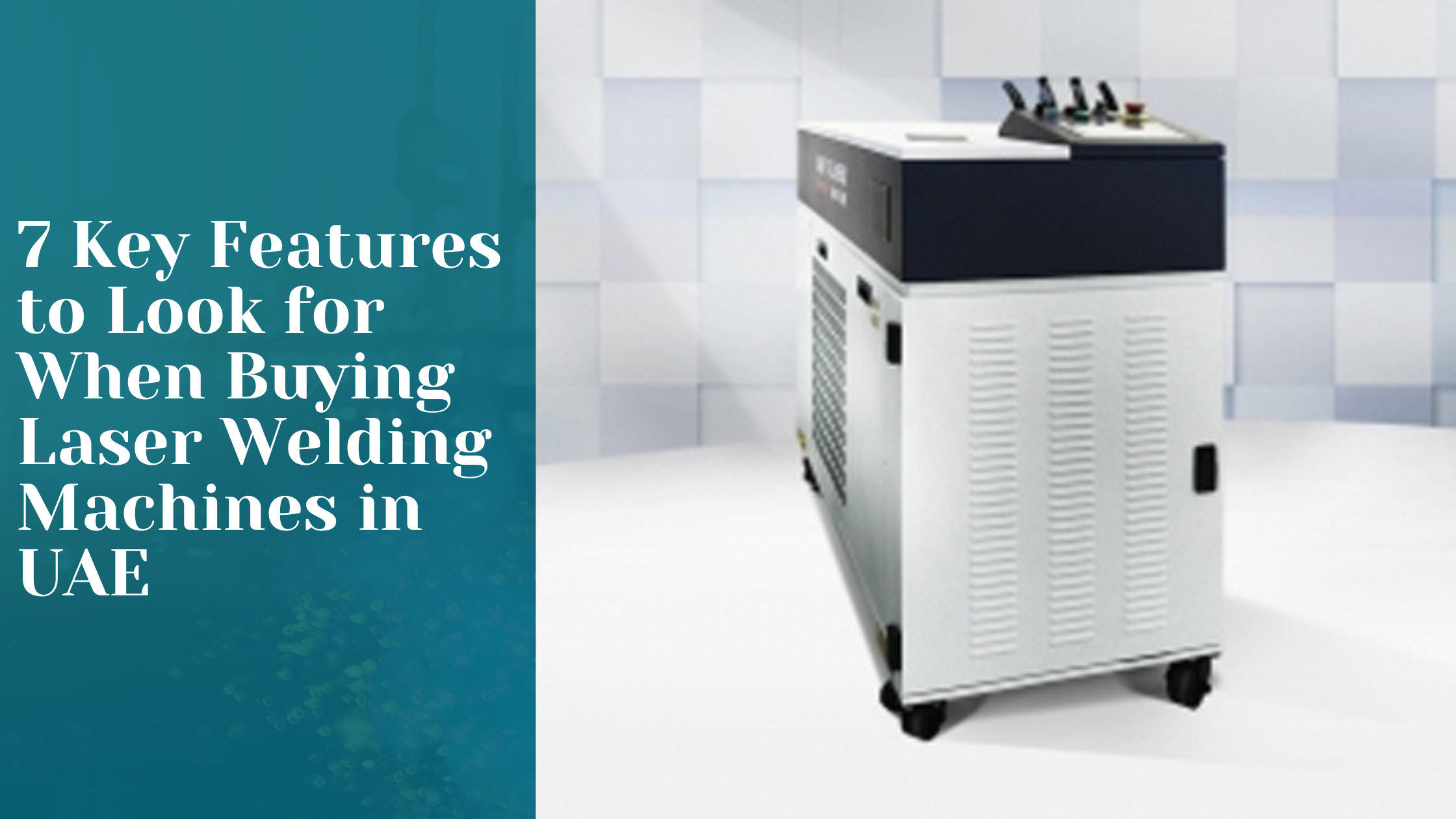
In recent years, the UAE has emerged as a leading hub for industrial innovation, driven by large-scale infrastructure development, advanced manufacturing, aerospace, automotive fabrication, and energy sector expansion. As manufacturers seek higher productivity and precision, laser welding machines in UAE have become essential tools for fabrication shops, OEMs, and welding automation integrators. Compared to traditional arc welding, laser welding offers superior accuracy, minimal heat-affected zones, faster cycle times, and repeatable results—key advantages that align with the UAE’s push toward Industry 4.0.
However, selecting the right laser welding system requires careful evaluation of core features that directly affect performance, reliability, and long-term ROI. Below are the 7 key features every buyer should consider before investing in laser welding equipment.
1. Laser Power and Output Stability
When evaluating laser welding machines in UAE, the first specification to consider is laser power rating and output stability. Laser power (measured in watts or kilowatts) directly determines the penetration depth and welding speed. For example, precision welding of thin stainless steel sheets (0.5–2 mm) may only require 1 kW of laser output, whereas medium-to-thick materials (3–10 mm) benefit from 2–4 kW systems commonly offered by Welding Equipment Suppliers in UAE.
Equally important is power stability—consistent energy output ensures uniform weld quality across hundreds or thousands of parts. The presence of fluctuations in a laser can result in defects, including but not limited to porosity and or weak joints. Look for systems with documented stability metrics (e.g., ±2% power variation) and built-in calibration routines.
2. Beam Quality and Focus Control
The quality of a beam (M² factor) describes how tightly focused a beam may be. A low M² value (close to 1.0) means a tighter focus, which translates into higher energy density and finer welds. This is crucial for applications like precision components in aerospace or electronics fabrication, common in the UAE industrial sectors.
Advanced focus control systems allow dynamic adjustments based on material thickness or surface contour, resulting in improved repeatability. Many modern laser welding systems offer auto-focus and programmable focal shift controls that support complex geometries without manual intervention.
3. Automated Motion and Positioning Systems
Laser welding is most effective when integrated with automated motion platforms—robotic arms, CNC stages, or gantry systems that position the laser with high accuracy. Precision positioning is key to eliminating operator variability and enabling high-throughput welding automation.
In the UAE, adoption of robotic integration in fabrication shops has grown significantly as manufacturers aim to reduce cycle times and eliminate human error. Robotic laser welding cells can achieve positional accuracy as fine as ±0.02 mm, ensuring consistent weld placement across complex parts. When evaluating machines, prioritize systems with reliable motion controllers, servo drives, and robust mechanical structures.
4. Material Compatibility and Thickness Capability
In the UAE, the modern laser welding machines offer versatility; that is, they have the ability to use multiple different types of materials in their applications. Whether you’re welding stainless steel for architectural metalwork, aluminum in automotive components, or high-strength alloys for energy equipment, understanding material compatibility is essential.
Laser welding excels with reflective and high-thermal-conductivity materials when paired with appropriate optics and power levels. Look for systems that specify recommended settings for different materials and thicknesses, along with example welding speeds and joint quality data. For instance, welding 3 mm aluminum may require different beam shaping optics than welding mild steel of the same thickness.
5. Safety, Enclosure, and Monitoring Systems
Safety should never be an afterthought—especially with high-power laser systems. A well-designed laser welding machine will come with fully enclosed safety enclosures, interlock systems, emergency stops, and proper ventilation to manage fumes and particulate matter. Industrial clients and regulatory authorities in the UAE expect compliance with various International (ISO) Safety Standards, including ISO 11553 Concerning the Safety of Laser Equipment.
Modern systems also include real-time monitoring and fault detection, which not only protect operators but also safeguard the equipment and workpieces. Features such as protective shutter systems, audible alerts, and automated shutdowns help maintain a safe working environment.
6. Software Intelligence and Connectivity
Smart software is at the heart of effective welding automation. The ability to store weld parameters, control sequences, and job recipes enables quick changeovers between product types, which is increasingly important for UAE fabricators handling diverse orders.
Look for intuitive control software with features like parameter presets, visual programming interfaces, and connectivity options (Ethernet, OPC-UA, IoT dashboards). Integration with MES or ERP systems allows shop floor data collection for KPIs like uptime, weld quality statistics, and throughput rates—essential for manufacturers focused on continuous improvement and digital transformation.
7. After-Sales Support and Warranty Coverage
Investing in a high-performance laser welding machine is only part of the journey. After-sales support, maintenance, and warranty are crucial—especially in the UAE, where minimizing downtime directly impacts productivity and profitability. A reputable Welding Equipment Supplier in UAE should offer local technical support, spare parts access, preventive maintenance contracts, and rapid response times.
Warranty terms, service-level agreements (SLAs), and availability of training for your team are differentiators that impact long-term satisfaction. Partner with suppliers who understand local industrial expectations and can support your operations on the ground.
Conclusion
Choosing the right laser welding machines in UAE requires a holistic evaluation of performance factors, automation capabilities, safety provisions, and supplier support. By prioritizing power stability, beam quality, motion control, material versatility, smart software, and reliable service, manufacturers can unlock the full potential of welding automation—boosting quality, efficiency, and competitiveness in today’s advanced fabrication landscape.
If you’re ready to explore robust laser welding solutions for your workshop or production line, contact a trusted Welding Equipment Supplier in UAE to discuss your applications and receive a tailored recommendation.
To read more, click: The Future of Welding Automation in the UAE Manufacturing Sector

Related Posts